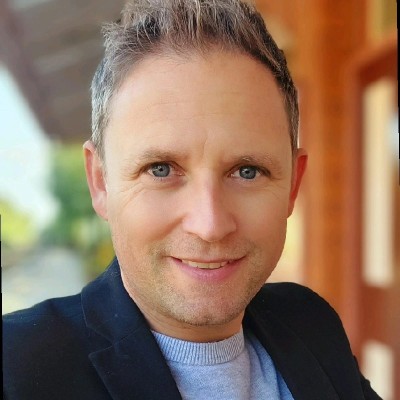
Ahead of the Digital Manufacturing Strategies Summit, we spoke with Duncan Brown, Senior Business Development Manager at Haskoning. Drawing on 25 years in global manufacturing, Duncan shares why digital transformation should start with the decision rather than the technology, how simulation and digital twins helped DS Smith test scenarios before committing to change, and why “decision intelligence” is one of the sector’s biggest opportunities. He also offers his advice for those entering the industry and his top tips for making the most of the summit.
Tell us about yourself, your company and your experience in the industry?
I’m Duncan Brown, a Senior Business Development Manager at Haskoning, focusing on how simulation can support businesses with their strategic and operational decision making. We are an independent international team of consulting engineers with a long heritage in engineering, design and consultancy, and we are now increasingly combining that expertise with software and technology.
I’ve spent my career in and around manufacturing facilities, beginning as a young graduate engineer, I spent 25 years working for global manufacturing companies. I have the stories and the scars to go with it, from high pressure new product launches to being the first person to walk into a facility following an aggressive takeover.
My focus now is helping manufacturers use simulation, optimisation and digital twins to make better decisions about complex operations. That might mean validating a capacity investment, testing an automation strategy, understanding bottlenecks, or helping teams move from instinct and ‘gut-feel’ planning to evidence-backed decision making in a world that has become increasingly complex.
How is your organisation responding to digital transformation in the industry?
At Haskoning, we see digital transformation as a route to better decisions. Our work brings together engineering expertise, operational understanding and digital tools such as our own Witness simulation software, optimisation solutions and digital twins. The aim is to help manufacturers model operations, test scenarios, understand risk and make investment decisions with more confidence. AI is now accelerating that journey by improving the speed to model, speed to results and speed to answer.
What outcomes do you hope to achieve in your participation at Digital Manufacturing Strategies Summit this year?)
We attended in 2025 and found it to be an excellent event filled with conversations with peers with similar interests and challenges. This year, I’d like to have practical conversations about how manufacturers can make smarter decisions, faster. Many organisations are under pressure to invest in automation, increase resilience and improve performance, but the decisions are becoming harder to assess through experience alone. I hope we can show how data-driven decision intelligence helps organisations make better decisions with greater confidence, exploring options, understanding trade-offs and reducing risk before major commitments are made. Simulation, digital twins and AI are simply powerful enablers of that process.
What excites you about the topics to be explored at the summit?
What excites me is the shift from talking about individual technologies to talking about the decisions they enable, and the value of creating a connected digital ecosystem. Our digital solutions all have value, but the real question is: what business problem are we trying to solve? In manufacturing, that could be capacity, resilience, productivity, cost, service levels or sustainability. The most interesting discussions happen when we start with those decisions and then work backwards to the right digital approach.
What do you see as the biggest challenges affecting the industry over the next 12-months?
Industrial organisations are under pressure to keep today’s business running while the assumptions beneath that business change faster than the ability to respond. With capital, capability and intelligence constrained and fragmented, every choice between improving today and preparing for tomorrow becomes more intertwined and consequential. The run is no longer stable enough to be managed separately from the change.
What surprises you most about digital transformation in the industry?
What surprises me is how often digital transformation still starts with the technology rather than the decision. Organisations may know they want/need AI, automation or a digital twin, but sometimes they don’t really know what that means, or why they need it. The real value comes from being clear about the question they need to answer. Another surprise is that many manufacturers already have a huge amount of useful data and operational knowledge. The challenge is turning that into evidence that supports timely, confident action.
How do you see digitalisation and automation improving the sector?
Digitalisation and automation can help manufacturers become more resilient, efficient and responsive. But the greatest value comes when they are implemented with a clear understanding of how the whole system behaves. Simulation and digital twins allow teams to test automation strategies, compare layouts, assess resource requirements and understand the wider impact of change before implementation. That reduces risk and helps ensure automation delivers the intended operational benefit.
Can you think of examples within your own projects of how automation / digitalisation has improved the sector?
I can think of many! But a good example is our work with DS Smith, where we used Witness simulation to help the team understand highly complex production flows at its Featherstone plant. The challenge was not just modelling equipment or throughput, but capturing the real scheduling logic, material movement and human planning decisions that influence production day to day. Once validated, the model gave DS Smith a trusted way to test new customer requirements, explore scheduling options and assess potential capital investment before making changes in the factory.
For me, that is where digitalisation really improves the sector. It takes the experience already inside the business and gives people a stronger evidence base to work from. In DS Smith’s case, the team could run scenarios, identify trade-offs and get to an answer faster, rather than discovering bottlenecks in real time.
That is exactly the shift we talk about: moving from gut feel to foresight, using simulation and digital twins to support better, faster manufacturing decisions.
Biggest opportunities for manufacturing the coming years?
One of the biggest opportunities is decision intelligence: combining data, engineering knowledge, simulation, optimisation, digital twins and AI to make better decisions across the manufacturing lifecycle. Manufacturers can move from asking, “What do we think will happen?” to “What does the evidence suggest, across a range of scenarios?” That creates opportunities to de-risk capital investment, improve resilience, optimise existing assets and respond more quickly to changing market conditions.
What are the biggest challenges relating to planning, designing and implementing your digital and automation strategies?
The biggest challenge is often defining the problem clearly enough. A digital or automation strategy needs to be anchored in business value: capacity, cost, throughput, resilience, service or sustainability. The next challenge is trust. Teams need confidence in the data, the model, the assumptions and the evidence being used. Finally, implementation requires alignment between people, processes and technology. The technology may be powerful, but adoption depends on whether it supports real operational decisions.
What did you learn from project experiences that might help industry colleagues going forward?
The main lesson is to start with the decision, not the tool. Be clear about what you need to know, what uncertainty matters, and what evidence would change the decision. I’ve also learned that experience and simulation work best together. The people who understand the operation are essential to building, challenging and interpreting the model. Digital tools do not replace that judgement; they give teams better instruments to test it.
As I love to say “Which decisions are too important to get wrong”!
What advice would you give someone who is just entering the industry and what, would you say, are your biggest career learnings?
I have the privilege of walking the shop floors of many of our industrial clients, and even after a career spent in manufacturing, I never fail to learn something new every time I walk into their facility. That curiosity is what drives me, so I would say firstly “stay curious”
Manufacturing has, and always will be, a hugely rewarding sector. The idea of adding value and making something tangible can be so gratifying. It can be a challenging industry that requires a high level of resilience. Manufacturing always gets hit hard first when global economies fail but they emerge the fastest, so strap in for the ride and enjoy the ups and downs.
Why should industry colleagues come to the summit in 2026?
The summit is a valuable opportunity to step back from day-to-day pressures and discuss the decisions shaping the future of manufacturing. The sector is moving quickly, particularly around AI, automation and digital transformation. Events like this help people compare experiences, challenge assumptions and understand what is working in practice. For anyone looking to make smarter manufacturing decisions faster, it is a useful place to learn, question and connect. That’s what makes DMS unique, having scheduled time to actually sit down and speak with delegates, it really brings great value to the whole event.
What is your top tip when attending summits and conferences?
My top tip is to be brave, start as many conversations as you can, most people are happy to talk, share their thoughts and share what’s on their minds.
Go in with two or three real questions you want to answer. It is easy to come away with a lot of information, but the most useful conversations usually start with a specific challenge. Ask people what worked, what did not, and what they would do differently. The value of a summit is not just in the presentations, but in the practical conversations around them.
And of course, come and chat to the Haskoning team with these questions, our digital solutions and experience combined is where we add real value and help many leading global companies.