Your digital transformation journey is unique.
Your summit experience should be too.
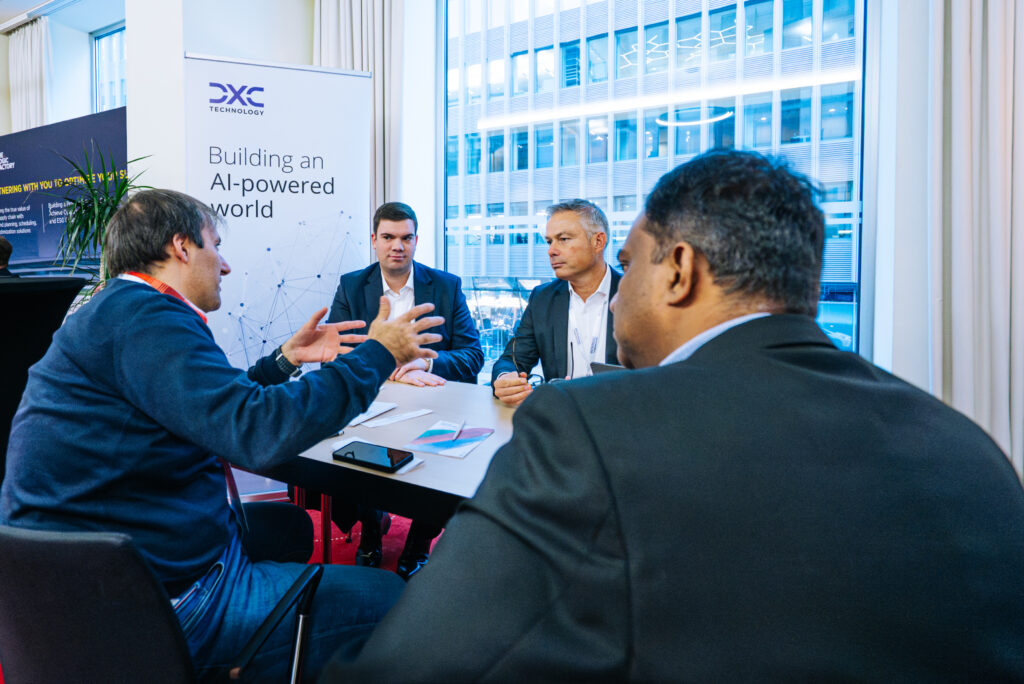
Every delegate receives a personalised agenda, built around their specific challenges, investment focus, and active transformation programmes.
When you register, you’ll outline your current objectives and areas of planned spend. This allows us to curate your two-day experience — aligning you with the most relevant Think Tanks, Roundtables, peer discussions, and 1-to-1 meetings.
Your time onsite is structured around what matters to you.
Our Advisory Committee, made up of senior manufacturing leaders, reviews aggregated delegate priorities to ensure the programme reflects real-world delivery challenges — practical implementation across complex manufacturing environments.
The outcome?
A focused, high-value experience where every session is relevant, every conversation is intentional, and every interaction supports tangible progress.
Navigating smart manufacturing in new complex environments
Automation technology is evolving at an extraordinary pace as the AI revolution breaks into mainstream commercial operations. Digital implementation is now mandatory across the manufacturing value chain.
But new areas of risk are also impacting supply chains – commodity price fluctuations, cost of importing materials and exporting products, energy efficiencies across manufacturing assets.
The summit explores: how manufacturers can align IT-OT priorities, build interconnectivity between new digital technology and legacy systems, move from AI pilot projects to large-scale implementation, reduce operational expenditure through predictive maintenance, and build a resilient digital workforce through upskilling and training.
These challenges are unpacked through four core themes reflecting the key challenges manufacturers face today:
2026 Themes
Operational Excellence as the Foundation for Digital Manufacturing
Connecting Engineering, Manufacturing & the Supply Chain
Manufacturers are under growing pressure to improve productivity, quality and responsiveness while navigating reshoring, tariff uncertainty, rising operating costs and increasingly complex manufacturing environments. Digital technologies create new opportunities to strengthen operational excellence, but lasting results depend on stable processes, reliable data and a culture of continuous improvement. Success comes from improving the way work is done, not simply introducing more technology.
Strategic Priority Areas
- Operational Excellence & Continuous Improvement
- Lean Manufacturing & Digital Transformation
- Industrial IoT & Connected Factory Operations
- Manufacturing Intelligence & Real-Time Visibility
- Robotics & Advanced Automation
- AI for Production & Operational Decision Support
- Energy Efficiency & Sustainable Operations
Escaping Pilot Purgatory
Manufacturers have no shortage of successful pilots. The challenge is turning isolated successes into capabilities that can be deployed consistently across production lines, plants and business units. Too often, organisations become trapped in pilot purgatory because the operational foundations, standardised processes, trusted data, governance and organisational alignment, were never established in the first place. This theme explores what it takes to build those foundations and scale digital manufacturing with confidence without compromising safety, quality or delivery.
Strategic Priority Areas
- Scaling AI Beyond Pilot Projects
- Data Readiness & Information Governance
- Enterprise Architecture & Digital Standards
- Leadership & Change Management
- Workforce Development & Digital Skills
- Cross-Functional Collaboration
- Measuring & Scaling Business Value
Many manufacturing challenges are determined long before production begins, and don’t end once a product ships. Decisions made during design shape manufacturability, quality and cost throughout the product lifecycle, while supply chain volatility, tariffs and demand uncertainty add risk at every stage. The opportunity is to connect engineering, simulation, new product introduction and supply chain planning through a digital thread that reduces risk end-to-end and helps bring better products to market faster.
Strategic Priority Areas
- Digital Engineering & Product Development
- Design for Manufacturability (DFM)
- Engineering Simulation & Virtual Validation
- New Product Introduction (NPI)
- Digital Twins Across the Product Lifecycle
- Supply Chain Visibility & Demand Forecasting
- Tariff & Disruption Risk Mitigation
Building the Connected Factory
Connected manufacturing depends on more than adding sensors or collecting more data. Manufacturers need secure, interoperable infrastructure that connects machines, production systems and enterprise applications while making trusted information available where decisions are made. Strong data foundations, open standards and connected operations are what enable AI, automation and continuous improvement to scale across the enterprise.
Strategic Priority Areas
- Industrial IoT & Industrial Connectivity
- IT/OT Integration
- OPC UA & Open Standards
- Edge-to-Cloud Architectures
- Manufacturing Data Platforms
- Enterprise Interoperability
- Cybersecurity & Digital Resilience
Ready to Join the Conversation?
Whether you’re looking to attend, speak, partner or just explore further, we’d love to hear from you.
Spaces are limited and strictly by invitation.